 The Contextual Therapy Certificate Program is a 220-hour course of study that was designed by a committee of five senior contextual therapists, all of whom studied extensively, in person with Dr. Ivan Nagy, one of the pioneers of Family Therapy, and with his early associates. They have each been practicing Contextual Family Therapy for more than thirty years. Participants receive a Certificate of Accomplishment on successful completion of the requirements. The program is offered in conjunction with the Family & Play Therapy Center Inc., in Philadelphia. Classes are held here at the Center, and are also simultaneously available across the country and internationally through the Center's Interactive Live Online Classroom (iLOC).
The training prepares the therapist to work with individual adults, parents and children together, teens, couples, and families, including intergenerational family therapy. Therapists describe learning Contextual Therapy as occurring in layers. This part-time, long-term program allows gradual learning to happen, while therapists apply the knowledge to their work with client families, as well as using the theories to reflect on their own lives. Course content includes the presentation and demonstration of concrete interventions. The classes are fun, meaningful and deep. The entire program can be achieved either in person or online with a part time schedule, over a five year period.
Core courses are scheduled in Philadelphia once a month, from September to June for three hours (9:00 AM–12:00 PM ET; 6:00 AM–9:00 AM in California; 2:00 PM–5:00 PM in London). In addition, we offer occasional half-day, one-day, and two-day courses (see Advanced Seminars) and occasional movie discussions through a Contextual lens. All of the classes may be taken separately, independent of a certificate program.
Credit Applications of the courses. All of our Contextual Therapy courses are approved for CE credits by the Social Work Board of PA (for Social Workers, Marriage and Family Therapists, and Professional Counselors). Approval in PA is recognized by many other states. Course hours may count toward certification renewal for the American Nurses Credentialing Center. They may also count toward both the play therapy specific and the mental health hours required by the Association for Play Therapy. Course and supervision hours may count simultaneously toward multiple credentials and may be used to meet yearly requirements for licensing and for credentialing with AAMFT and APT.
A Selection of Contextual Therapy Concepts:
- the Five Dimensions of Contextual Therapy
- Emphasizing Strengths rather than Pathology
- Multi-directed Partiality
- Dialogue and Asking Questions
- Trust, Love, and Care
- Fairness – Keeping Relationships in Balance
- Giving, Taking, and Receiving
- Acknowledgement
- Parentification
- Loyalty and Split Loyalty
- Constructive and Destructive Entitlement
- Scapegoating Family Members and Family Monsters (Is compassion possible?)
- Exoneration and Forgiveness
- Revolving Slate: Issues over Generations
- Concern about Future Generations
- Self of the Therapist

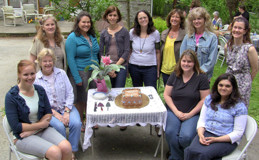 The post graduate programs at the Family and Play Therapy Center allow therapists to acquire professional credentials. These courses are extensive, in-depth treatments of both theory and practice. Therapists find that they offer frameworks that are reliable when applied to their work with clients. The programs are generally taken part time, in conjunction with the therapists' ongoing professional practice. Besides the important course material, participants benefit from regular contact with a community of professionals who are both diverse and like-minded.
 Advanced Child Development Course